


2025-12-01
At the recent 2025 WTA • Xianghu Dialogue in Hangzhou, China, Mr. Adam BURKE, WTA Vice Chair, President and CEO of Los Angeles Tourism & Convention Board, delivered a keynote speech titled "Leveraging the Power of Major Sporting Events to Promote Community Development". In his address, he provided insights into critical areas ranging from a data-driven understanding of the sports economy and emerging consumption trends to tackling core challenges, leveraging major events for tourism transformation, and building a lasting legacy. Here are the key insights from his speech.
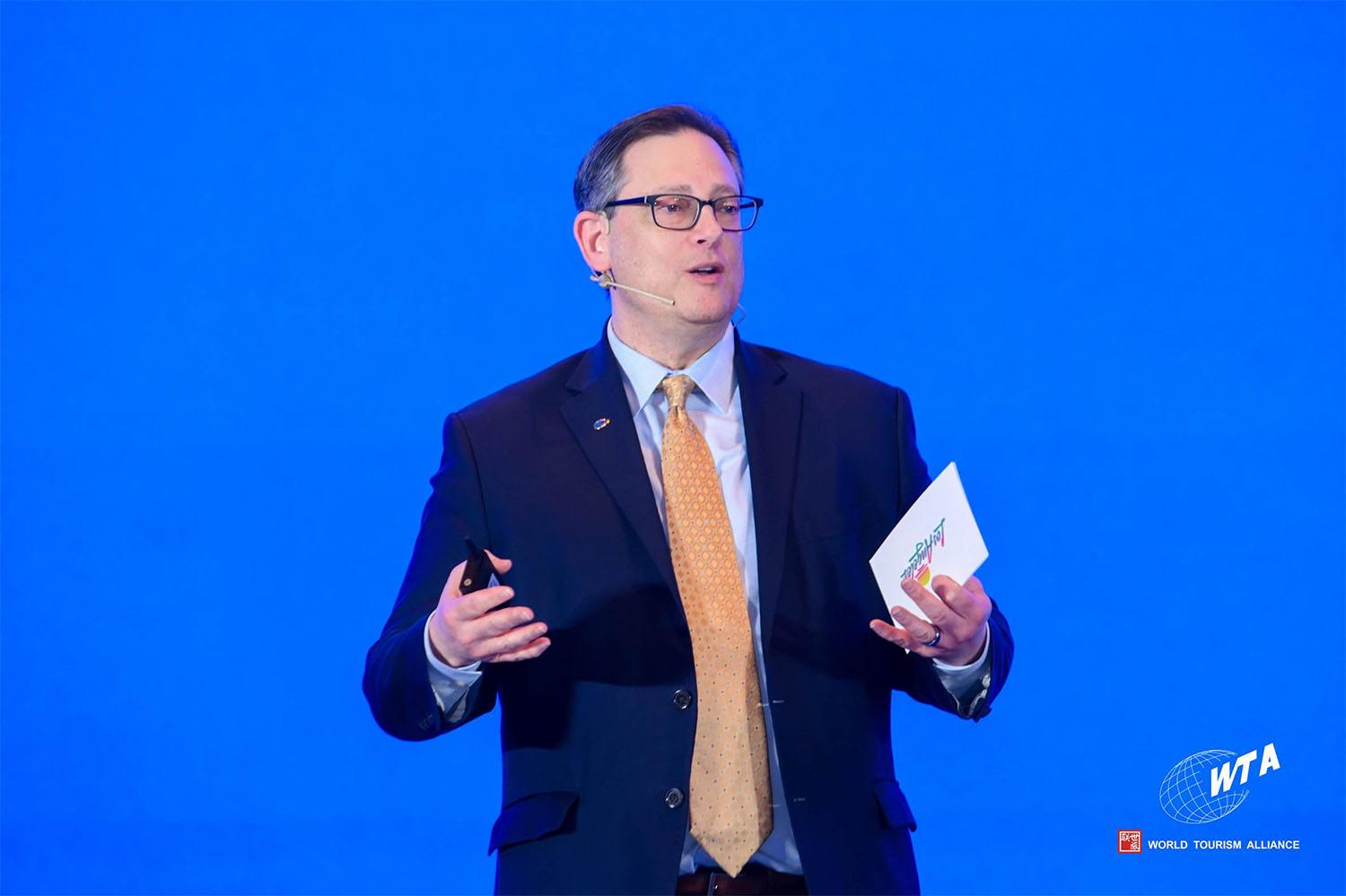
The World Tourism Alliance operates under the guiding principle of "Better Tourism, Better Life, Better World", which aligns perfectly with the mission of the Los Angeles Tourism & Convention Board: "Improving the quality of life for all Angelenos through the economic and community benefits of tourism". Last week, we celebrated the 10th anniversary of our Guangzhou office, and next year we will commemorate the 20th anniversary of our Beijing representative office. These milestones underscore our long-term commitment to connecting China and Los Angeles, building bridges of friendship and strong bonds between our people through cultural and personal exchanges.
Sporting events play a critical role as a global connector, which is the very heart of my address today. As an international sports capital, Los Angeles has continually deepened its emotional connection with the world through major events like the Olympic Games and the FIFA World Cup.
Today, I’d like to present five key observations.
1. Data Driving the Sports Economy
The global sports tourism sector, now valued at over $560 billion, represents roughly 10% of total tourism expenditure and continues to show robust growth. Projections indicate this figure will surge to $1.3 trillion by 2032, establishing sports tourism as the fastest-growing engine within the global travel industry.
2. Navigating Emerging Consumer Trends.
Research reveals that 84% of travelers are willing to choose a destination specifically for an event in the coming year, with nearly 60% planning two or more sports-themed trips. Concurrently, digital and streaming platforms are fundamentally reshaping the fan experience, creating boundless new possibilities for sports tourism. This demands that we expand our global audience and strategically convert events into opportunities for city marketing. To this end, we are strengthening partnerships with local professional leagues in hockey, soccer, baseball, and basketball. By leveraging our teams’ overseas competitions to promote Los Angeles concurrently, we transform event buzz into tangible travel appeal.
3. Proactively Addressing Practical Challenges.
Taking the FIFA World Cup 2026 as an example: over half of the visitors to North American host regions are expected to be international, and 59% of them may encounter language barriers. Furthermore, while 32% of visitors are accustomed to mobile payments, many local hotels still operate primarily with physical credit cards. These gaps underscore the necessity for a forward-looking approach to turn challenges into opportunities — by optimizing services, we can drive sustained regional economic growth.
4. Harnessing Mega-Events to Drive Urban Transformation.
Major events are powerful accelerators of urban change. For Los Angeles, 2026 will be a "Year of Sports", featuring not only the highly anticipated World Cup but also events like the NBA All-Star Game and the U.S. Women’s Open Golf Championship. We are particularly proud that Los Angeles will become the third city globally — and the first in the United States — to host the Olympic Games three times. In collaboration with partners like the Los Angeles Sports & Entertainment Commission, we are working not merely to promote individual events, but to cement Los Angeles’s status as the world’s premier "Capital of Sports".
5. Building a Lasting and Valuable Legacy.
History shows that the impact of sporting events often extends far beyond their year of occurrence. The enduring legacy of the Beijing 2008 Olympics, which continues to inspire admiration, is a prime example. Los Angeles is planning with the same long-term vision. We are modernizing our 50-year-old convention center in preparation for the 2028 Summer Olympics, using this catalyst to comprehensively accelerate the upgrade of the city’s infrastructure.
Building on this, establishing Los Angeles as the global "City of Sports Icons" is an eminently achievable goal, thanks to our eleven world-class professional clubs. By empowering these star athletes to act as ambassadors for our diverse neighborhoods, we weave sports into the city’s multicultural fabric, creating lasting impact and enriching the entire tourism ecosystem.
As sports tourism accelerates, we must prioritize sustainable development. A key challenge is "event-driven displacement", where some residents leave due to perceived disruptions. Our strategy addresses this through three pillars:
1.Deepening Community Co-creation: Engaging residents as ambassadors and participants is essential; without local support, events lose their soul, becoming mere spectacles rather than meaningful experiences.
2. Supporting Local Businesses: We work to ensure visitor spending benefits local enterprises, avoiding the revenue drop seen in early stages of past Games.
3. Promoting Inclusive Growth: One of the World Tourism Alliance’s core missions is Promoting Tourism Poverty Alleviation, and we apply the same principle to major sporting events by ensuring underserved communities share in their benefits. To make this concrete, our special membership program helps small and multicultural businesses participate: the first year is fee-free and the second year carries a 50% discount, lowering barriers to entry so local enterprises can capture economic opportunities created by global sports events.
While sporting events serve as powerful catalysts for transformation and economic growth — offering visitors extraordinary, immersive experiences — we must also proactively manage risks such as the "pre-event dip", a noticeable lull in tourism that often occurs before major tournaments. Historical data shows that in previous Olympic host cities, hotel bookings dropped by approximately 40% in the months leading up to the Games. To address this, we can look to innovative strategies like those used for the Paris Olympic Games, where local residents were encouraged to participate in the Opening Ceremony and social media campaigns were launched to engage non-sports fans well in advance. These efforts helped smooth the visitor curve and safeguard the local economy.
For Los Angeles, major sporting events serve as a pivotal force for transformation. They hold high strategic value for the Mayor and the city. To this end, we are establishing a permanent, cross-departmental collaboration mechanism. We are actively guiding departments such as public safety, health, and transportation to share responsibility, ensuring visitors receive an outstanding experience. We are creating multidimensional "Sports+" experiences by integrating sports with our culture, arts, and cuisine, designing themed itineraries and year-round tourism products. Concurrently, we are systematically upgrading municipal infrastructure to achieve seamless connectivity from the airport to the venues. It is also noteworthy that the U.S. federal government has approved visa facilitation measures for ticket holders during the World Cup — a positive and significant step forward.
Our firm belief is this: Visitors must not only be welcomed but truly embraced by our community.
In closing, allow me to conclude with the words of Nelson Mandela, South Africa’s founding father: "Sport has the power to change the world. It has the power to inspire. It has the power to unite people in a way that little else does". Sporting events are a transformative engine for tourism. Let us move forward together and, through the deep integration of sports and tourism, strive to create a better world and a better life for all.