


2025-12-03
At the "2025 WTA • Xianghu Dialogue" held recently in Hangzhou, China, both Chinese and international guests engaged in in-depth discussions on the theme "Where Tourism Meets Education: A Journey of Cross-Sector Growth".
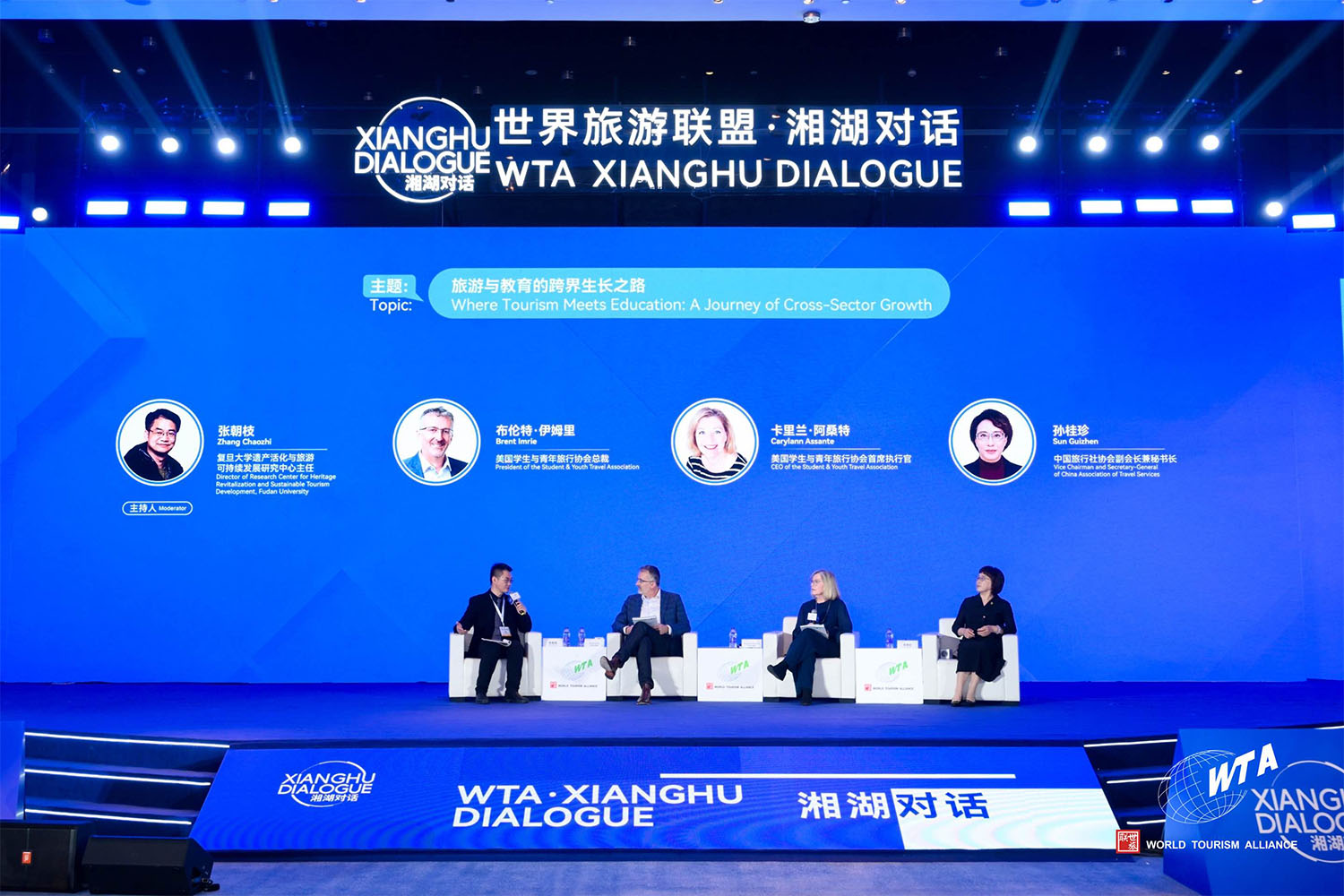
Moderator: Dr. ZHANG Chaozhi, Director of Research Center for Heritage Revitalization and Sustainable Tourism Development, Fudan University
Panelists:
Mr. Brent Imrie, President of the Student & Youth Travel Association
Ms. Carylann Assante, CEO of the Student & Youth Travel Association
Ms. SUN Guizhen, Vice Chairman and Secretary-General of China Association of Travel Services
Here is a transcript of the discussion:
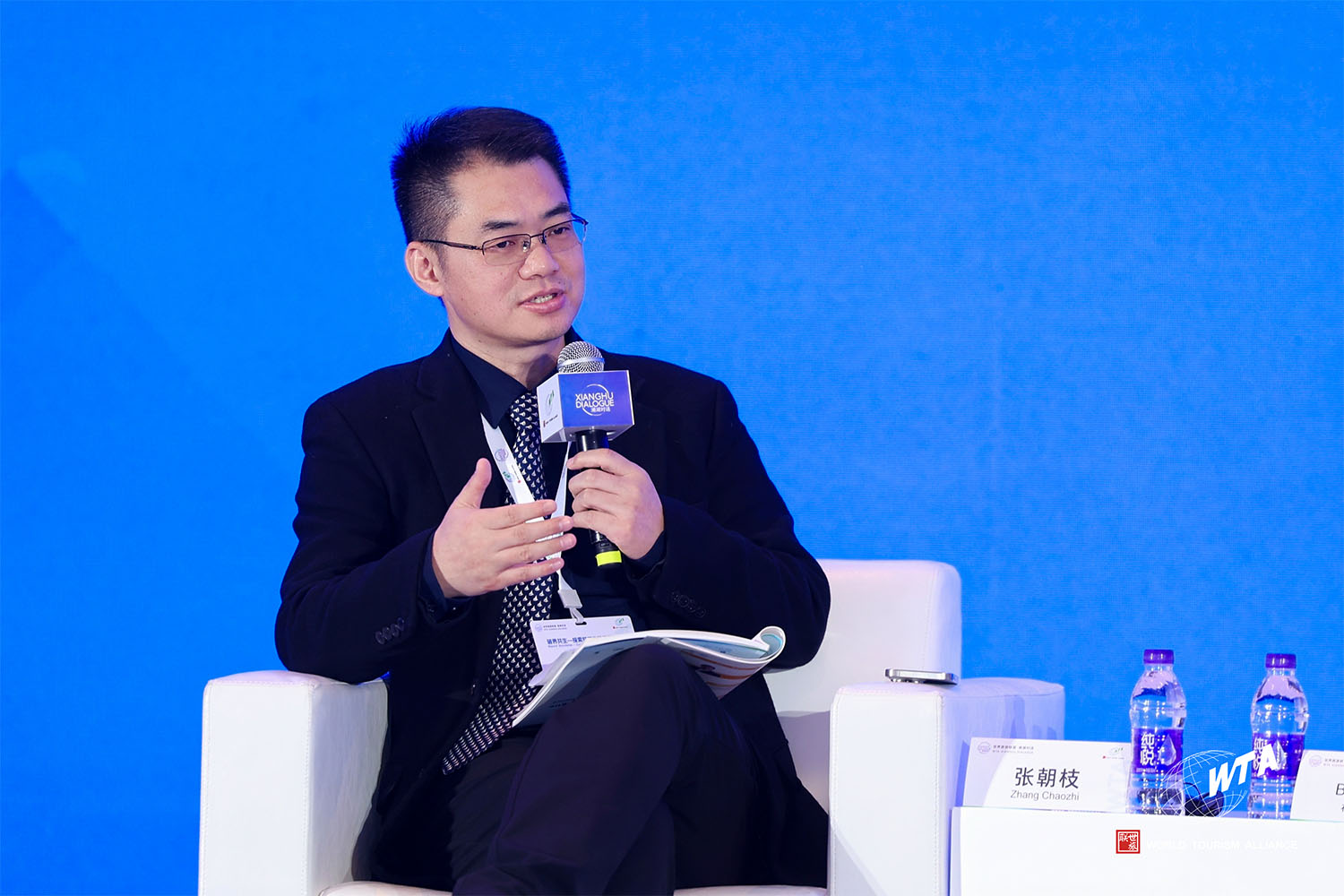
Moderator: The cross-sector integration of tourism and education is a vivid embodiment of "education through entertainment". Tourism settings are rich with value-laden elements conducive to experiential learning. By embedding core educational concepts into travel experiences, we can transform them into meaningful opportunities for knowledge dissemination, cultural heritage, personal growth, and experiential movement — ultimately injecting lasting vitality into the industry. Specifically, how can this symbiotic relationship between tourism and education help strengthen students’ competitiveness?
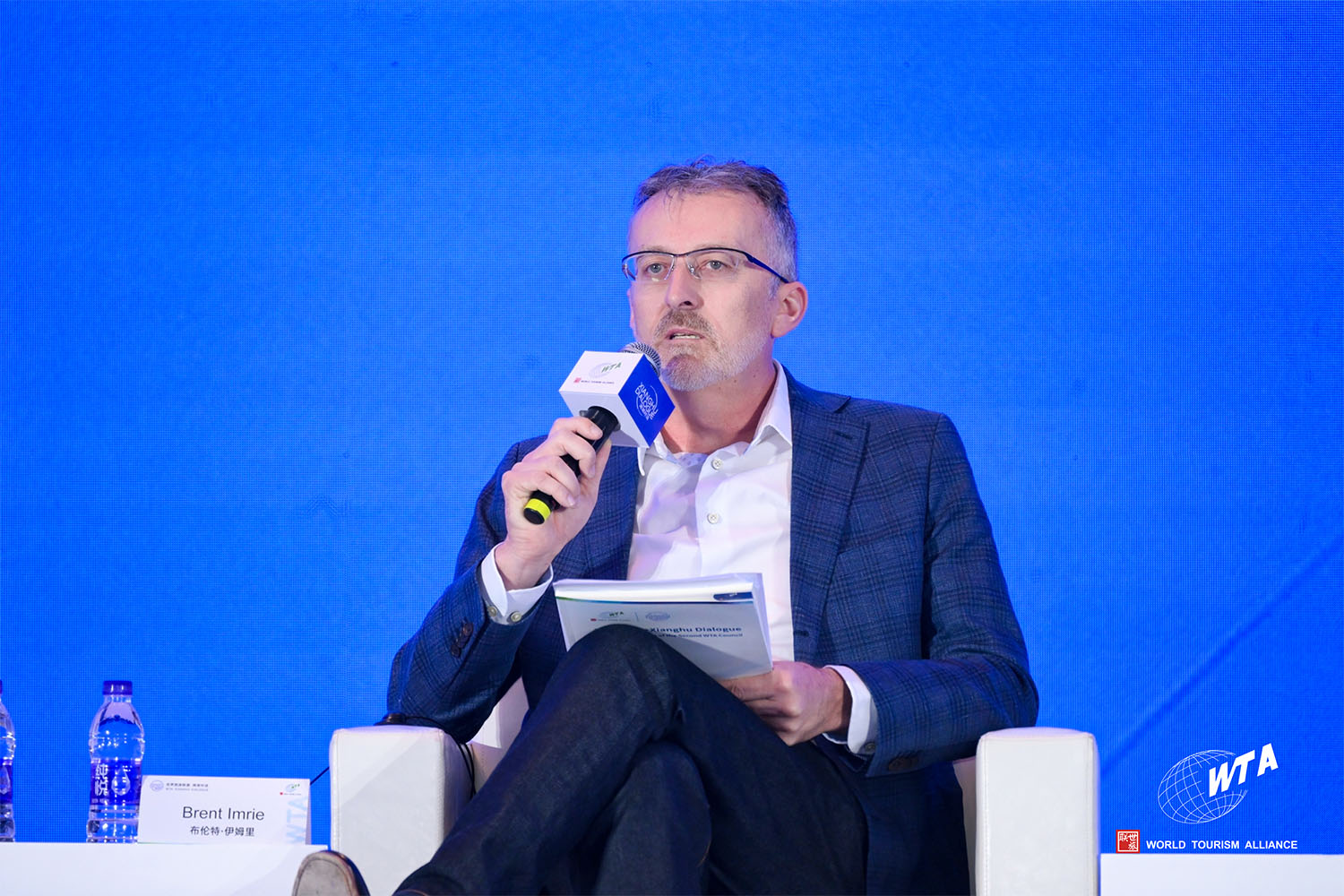
Mr. Brent Imrie: We classify youth travelers as those aged 25 and under. They travel with clear goals — often related to education, culture, music, sports, or language learning. Today, youth travelers make up about 25% of the global tourism market, representing a significant force for learning beyond the classroom. In our observation, youth travel typically takes two forms: Curriculum-led travel — such as history students visiting Italy or Greece, or science classes extending lessons through trips to Washington, D.C. or Canberra; experience-led travel — for example, Chinese students performing at music festivals in Vienna, Australian and New Zealand students touring NASA in the U.S., or exploring innovation hubs like Hangzhou, known as China’s "Silicon Valley". These themed international exchanges are vital for promoting cultural heritage and mutual understanding. Currently, we are working closely with industry associations in the UK, Australia, and New Zealand to develop a unified health and safety standard system and advance professional certification for travel agencies and practitioners. This ensures that youth travel achieves its intended educational outcomes on a foundation of safety.

Ms. Carylann Assante: A major challenge in youth travel today isn’t a lack of awareness — it’s that the market potential is still underestimated. Many assume young travelers have tight budgets and only opt for low-cost offerings, overlooking their long-term value. These trips are often family-funded. Parents care about cost, but even more about safety and educational return. That’s why youth travel sees strong repeat engagement — students and teachers who’ve had a positive experience often inspire the next cohort from the same school to sustain their involvement. We must deeply understand and honor the trust parents place in us when they entrust their children to our care. Balancing safety with learning outcomes is key. At the same time, equity and inclusion matter. Through our industry foundation, we offer scholarships to support students, classes, and even teachers — ensuring young people from diverse economic backgrounds can access these opportunities. Moreover, the balanced application of technology and innovation is making a real difference. The question of how to best use technology to inspire students and enrich learning beyond the classroom remains a critical area for collective exploration within our industry. Through ongoing cross-sector dialogue, we hope to better leverage tech to shape the future of educational travel.
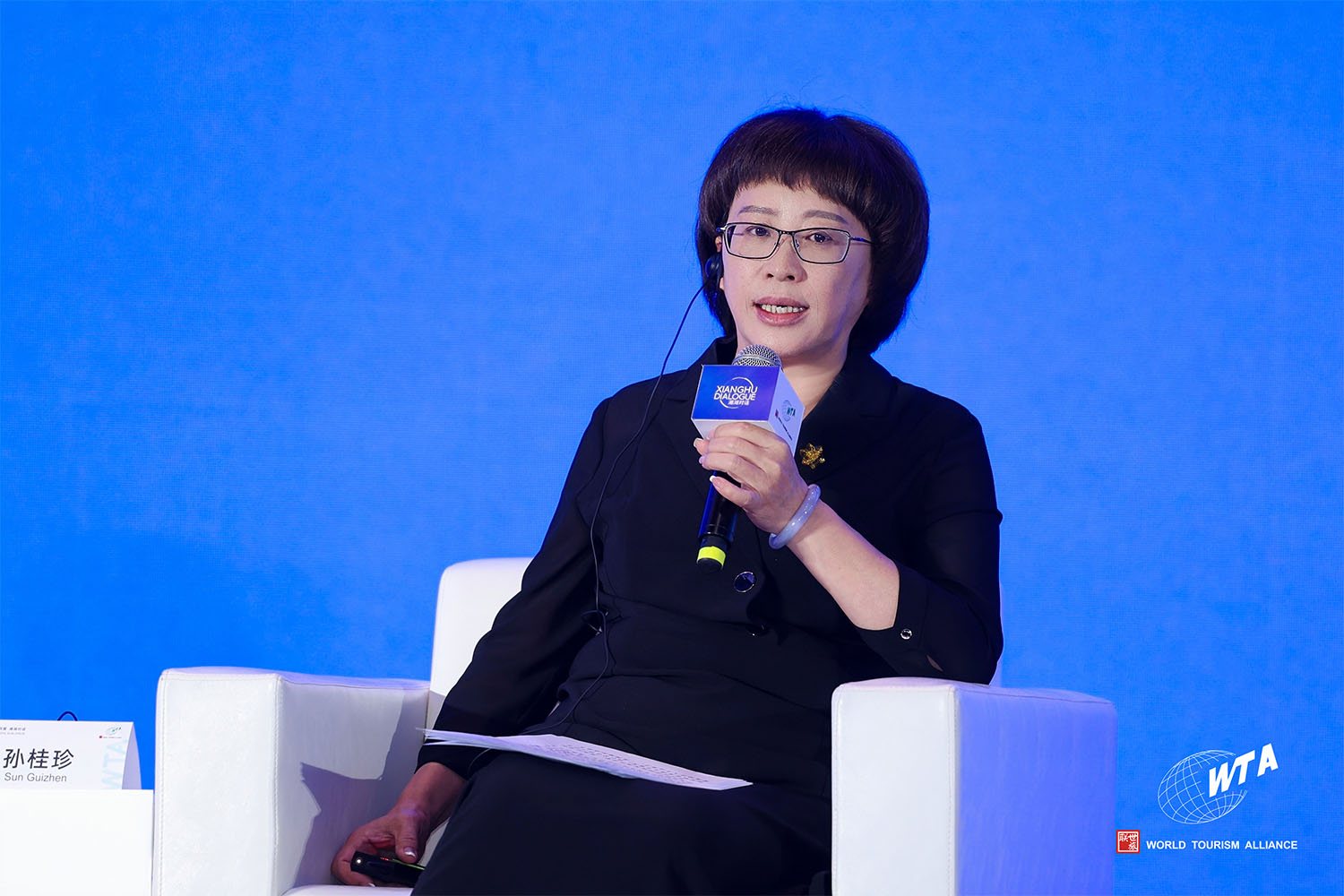
Ms. Sun Guizhen: According to recent data, China’s educational travel market surpassed RMB 140 billion in 2023 and is projected to exceed RMB 240 billion by 2026 — reflecting enormous growth potential. To address early-stage irregularities in the market, the China Association of Travel Services has focused on two priorities: standardization and resource integration, to steer the sector toward healthy development. On the standardization front, we have been actively engaged in the formulation of national industry standards released by the Ministry of Culture and Tourism, including the Requirement for Outbound Educational Tourism Service and the Guideline for Curriculum and Route Design of Educational Travel. So far, nearly 150 educational travel bases and camps have been certified against these standards. We’ve also rolled out vocational skill standards for educational travel instructors, helping train nearly 10,000 instructors to date and facilitating the inclusion of this role in the national directory of emerging professions. At the association level, we’ve released five key group standards covering instructor competence, base and camp services, curriculum design, and quality requirements for organizers. We’ve also developed the Specifications for Hong Kong Youth Visit and Exchange Reception Service in the Mainland to support the "One Million Youth Sees the Motherland" initiative. In resource integration, the association set up a dedicated Educational Travel Branch in 2017, bringing together over 200 travel agencies, educational bases, technology and educational firms. This platform encourages joint development of bases, co-design of curricula, shared cultivation of participants, and mutual sharing of outcomes. For example, we encourage our members to partner with aerospace companies to translate advanced technological resources into accessible, exploratory curricula for young learners — truly integrating education and travel in an organic way.
Moderator: A common challenge in current educational travel programs lies in balancing the “educational” and the “recreational” dimensions. In practice, how should we properly manage the relationship between learning and leisure?
Mr. Brent Imrie: Not every trip is inherently educational. To ensure that travel delivers knowledge, skills, and values to students, we focus on three key elements: (1) Curriculum Alignment: In New Zealand, for example, educational travel content is closely aligned with subjects in the national school curriculum — such as history, science, and the arts. The same applies in Australia and the United States. We work directly with teachers to ensure travel objectives are synchronized with classroom learning goals. (2) Experiential Learning: Students learn through engagement, hands‑on activities, problem‑solving, and interaction with local communities — not simply by "checking off" tourist sites. Take museum visits, for instance: they should not be passive walk‑throughs, but should integrate clear learning outcomes, effectively extending the classroom into the wider world. (3) Reflection and Debriefing: Whether a trip is domestic or international, time must be set aside afterward for students to reflect, share insights, and internalize their experiences. A truly high‑quality educational trip delivers both meaningful learning outcomes and an enjoyable travel experience. It fulfills educational needs while creating lasting memories. That’s why the notion that educational travel is "just for fun" is a misconception — what we create is measurable educational value.
Ms. Carylann Assante: I’d like to share a personal observation: allowing students to engage in moderate recreational activities during travel often helps them learn more — and retain more. This has become especially evident in the post‑pandemic era. After extended periods of online learning at home, students are eager to go out and reconnect with the world. Incorporating appropriate leisure elements into educational itineraries is not only necessary but important. As industry professionals, we should advocate for a model of "learning through experience". Of course, having a government‑supported curriculum framework to guide content, combined with execution by professional travel organizations, would significantly enhance the overall quality of educational travel offerings. I am particularly looking forward to deeper collaboration with our Chinese counterparts to advance the professionalization of educational travel. Only in this way can we inspire active participation from schools, educators, and students — and truly realize the vision of joyful, meaningful, and impactful learning through travel.
Ms. SUN Guizhen: The discussion around "travel without learning" has persisted in our industry for years. Fortunately, tourism professionals today have developed a much deeper understanding of educational travel. In our view, the root of the challenge lies in two key areas: (1) Many scenic spots and educational bases still operate with a traditional mindset focused on general tourism reception. They have yet to effectively transform their resources into structured, experience‑based products with clear educational value. (2) There also remain common misconceptions regarding the relationship between education and recreation. We believe education is the soul, tourism is the vehicle, and engagement is the method. Only through the organic integration of these three can children achieve their learning objectives enjoyably.
To that end, in the group standards issued by our association, course design and the training of educational travel instructors account for about 60% of the overall focus. We emphasize the following: Curricula must be goal‑oriented, engaging, and measurable in outcome. For example, simply explaining traditional Chinese architectural components like dougong (brackets) verbally has limited effect. However, involving students in hands‑on activities such as assembling mortise‑and‑tenon models sparks interest and deepens understanding. Assessment of educational outcomes should be diverse. Rather than relying on simple scoring, evaluation can include observation, project displays, group collaboration, and presentation sharing to provide a holistic view of student development. Innovative technologies such as AR and VR should be fully utilized to create immersive learning environments — like "Exploring the Ocean Depths" or "Journeying Through Space" — enhancing both engagement and knowledge retention. Ultimately, educational travel must stay true to its educational purpose while respecting the nature of tourism. Through well‑designed curricula, qualified instructors, scientific assessment, and thoughtful use of technology, learning can blend naturally and effectively into every journey.
Moderator: To conclude, could each of you briefly share your view on the key to successfully integrating tourism and education?
Mr. Brent Imrie: If I could offer one piece of advice to practitioners, it would be this: Be an educator first, a travel professional second. Tourism is the form and the carrier, but education is the essence. When designing educational travel programs, we must always ask: How can this journey best fulfill an educational purpose? Only by genuinely enhancing the educational value can we earn the trust of students and parents. Professionals should carefully evaluate each experience: What kind of inspiration or growth will this bring to the student?
Ms. Carylann Assante: I’d like to speak from an economic perspective on the value of educational travel. High‑quality educational travel products not only nurture students — they also serve as strong drivers of local economies. Take the United States, for example: many students travel to New York to attend Broadway shows or visit museums. Data show that the average student spends around USD 1,800 during a one‑week educational trip, a significant portion of which goes toward admission to cultural venues. This demonstrates that investment in quality educational travel is both an educational input and an economic catalyst. Students gain exposure to arts and history, while host cities benefit from the sustainable economic returns brought by educational tourism. Therefore, we should actively develop educational travel products that are meaningful in content and valuable economically — creating a true win‑win for personal development and local growth.
Ms. SUN Guizhen: Looking ahead, I hope to promote the internationalization of China’s educational travel standards, working alongside global partners to jointly establish mutually recognized and widely applicable industry norms, so that China’s experience can benefit the world. Since assuming the role of President of the Educational Travel Branch of the China Association of Travel Services, I have deeply felt the weight of this responsibility and mission. I firmly believe: Every well-designed curriculum has the potential to light up a child’s future; every educational journey may plant a seed in a young heart. Perhaps tomorrow’s scientists, pilots, or astronauts will trace their inspiration back to a single educational travel experience. My aspiration is to ensure that today’s educational journeys become the fertile ground from which tomorrow’s innovators grow.
Moderator: Travel itself is a form of learning. As the Chinese saying goes, "Read ten thousand books; travel ten thousand miles". Today, China is actively advancing the refinement of educational travel standards, with a strong commitment to fostering the organic integration of education and tourism. In this process, exchanges and mutual learning across different cultural contexts and market environments are increasingly vital. Looking ahead, there are great opportunities for collaboration. We should strengthen the synergy between tourism and education, and deepen cross-cultural, regional, and market cooperation to shape the future of educational travel.