


2025-12-02
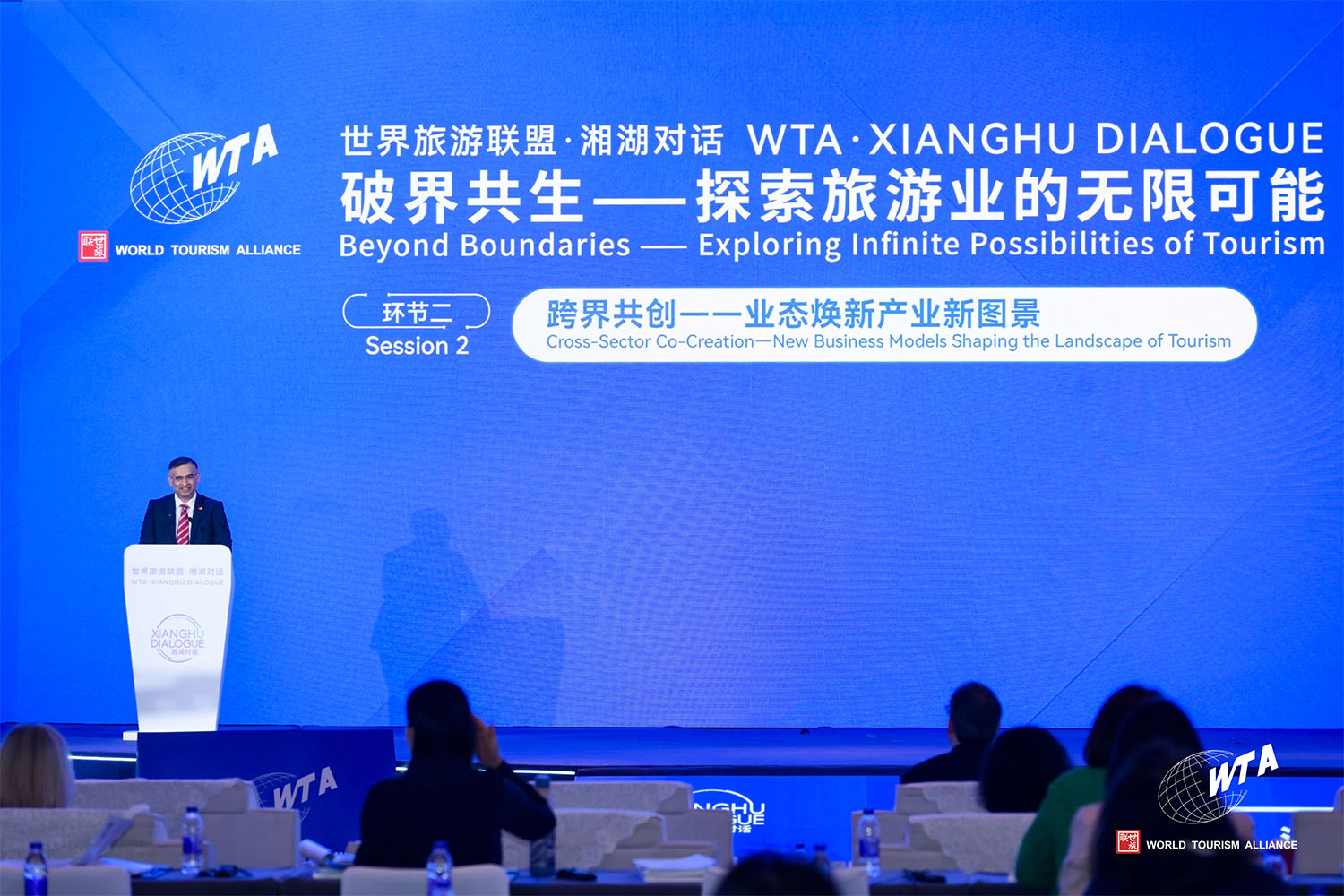
At the 2025 WTA • Xianghu Dialogue held recently in Hangzhou, China, Mr. Rajat Maheshwari, Senior Vice President of Mastercard Asia/Pacific Pte. Ltd., delivered a keynote speech titled "Cross-Border Tourism Consumption Upgrade: Experience-Driven, Tech-Empowered, and Sustainable New Landscape". The following is an excerpt from his address.

Mastercard operates as a global payment network across more than 210 countries and regions. Our position at the heart of payments and transactions allows us to gather extensive data, and through ongoing analysis, we can clearly see the strong resilience demonstrated by the tourism industry in the face of economic fluctuations.
The global tourism industry continues to grow steadily, with both international arrivals and travel spending on the rise. According to UN Tourism, worldwide travel reached 690 million trips in the first half of 2025 — a 5% year-on-year increase. International tourism revenue for 2024 is projected to reach $1.7 trillion, up 11%, while per-capita travel spending rose by 3.9%.
Our data points to three key factors reshaping travel behavior and tourism industry patterns:
1.Traveling for "Value": Exchange‑rate movements and geopolitical dynamics are leading travelers to prioritize cost‑effectiveness.
2.Paying for "Experience": Tourists increasingly seek immersive engagement beyond sightseeing, with nature, wellness, and deeper local experiences becoming core motivations.
3.Traveling for "Idols": Major sports competitions, concerts, and international gatherings have become powerful engines for tourism consumption.
China’s outbound travel and spending trends are equally notable. From 2024 to 2025, outbound tourism has entered a phase of stable growth, driving consistent expansion in tourism consumption. Data shows significant increases during major holidays in both inbound and outbound travel, as well as in offline spending by Chinese outbound tourists. Short‑haul Asian destinations remain especially popular, particularly those offering visa‑free or visa‑on‑arrival entry. South Korea, Thailand, and Singapore — all with visa‑free policies for Chinese travelers — have attracted substantial visitor flows. Beyond these, emerging destinations such as Brazil, Georgia, and Saudi Arabia are also seeing noticeable growth in Chinese tourist arrivals.
In outbound travel decision-making, different groups show distinct priorities. Generation Z often travels on impulse — driven by sports events or concerts — making them digitally native and spontaneity-focused travelers. Family travelers emphasize safety and educational value in their carefully planned trips. The silver generation, meanwhile, strongly advocates for deep, immersive experiences. This segmentation by age and interest is accelerating tourism’s shift from traditional sightseeing to experience-based travel. The "concert economy" has become a standout growth driver. A prime example is Taylor Swift’s 2024 concert in Singapore, which contributed an estimated $300-400 million to local GDP, spurred a 189% year-on-year increase in tourist arrivals and a 200% rise in air traffic — with the majority of visitors coming from China. This clearly highlights how entertainment consumption and major events can significantly boost a local economy.
Travel modes are also evolving. Independent travel continues to grow as a share of outbound trips, gradually overtaking group tours. This shift has increased demand for overseas car rentals, with more Chinese tourists opting to rent and drive abroad. Interestingly, in unique destinations such as Antarctica, group tours still show strong growth, with data indicating a steady rise in Chinese group travelers to the region.
Inbound tourism to China is gaining momentum. In the first half of 2025, arrivals to major Chinese cities grew significantly, supported clearly by visa-free policies. Since 2023, the number of international flights operated by Chinese airlines has also trended upward. According to Trip.com data, the top eight source countries for inbound tourists to China all benefit from visa-free or transit-visa-exemption arrangements. When it comes to length of stay, age plays a clear role: younger inbound visitors tend to take shorter trips, while travelers aged 50 and above stay longer and show higher demand for in-depth experiences. Geographically, spending remains concentrated in first-tier and new first-tier cities. Beijing, Shanghai, Guangzhou, and Shenzhen are most popular among tourists from the Americas, Europe, and the Middle East; Chengdu, Chongqing, and Changsha in the "Chuan-Yu-Xiang" region attract more visitors from East Asia and Southeast Asia; Shandong has also seen a notable rise in inbound numbers. In terms of spending patterns, inbound tourists are shifting toward offline experiences and local lifestyle consumption, with explosive growth in transportation, payments, shopping, dining, and accommodation. Tourist spending preferences in different destination cities also vary, with shopping-related consumption showing a growth trend in major cities. Notably, inbound tourist expenditure in Chengdu has approached or even exceeded the average levels seen in first‑tier cities such as Beijing, Shanghai, Guangzhou, and Shenzhen.
Now let’s look at a few popular destinations. Take Spain as an example — it is now a top destination for Chinese travelers. In 2024, Chinese arrivals to Spain grew 67% year on year. Increasingly, Chinese travelers are moving beyond major city sightseeing to explore smaller towns and immerse themselves in local culture. To support this shift, Mastercard has partnered with several Chinese cities to promote cultural deep-dive tours, authentic local experiences, and theme-based travel through social media and platforms like Trip.com. The results have been striking, with a clear rise in Chinese visitors to smaller cities.
In China, Chengdu’s tourism continues to grow, driven by international sporting events, giant pandas, esports tournaments, and other major attractions. The World Games, in particular, gave inbound tourism a significant boost — data shows that during the World Games 2025, Chengdu welcomed 69,000 international visitors, a 72.5% year-on-year increase. Mastercard has also deepened cooperation with the Chengdu Municipal Government, illustrating that cities offering distinctive experiences are more likely to attract international travelers.
Looking ahead, several emerging trends are shaping global tourism: 1. Travel Driven by Emotion — Emotional and psychological needs are increasingly influencing travel decisions. 2. Travel Inspired by Local Culture — Tourists are placing greater value on authentic local culture and everyday lifestyle experiences. 3. The AI Revolution in Travel — Online travel platforms are integrating AI models to enhance service efficiency, improve user experience, and strengthen competitiveness.
We have also observed that China needs to further enhance the convenience of inbound tourism by improving each stage of the visitor journey. Key recommendations include strengthening international transport connectivity, optimizing the mobile internet experience for overseas travelers, upgrading on‑site services at attractions, increasing payment convenience, and streamlining tax‑refund procedures.
In conclusion, multi‑dimensional collaboration is indispensable for driving the sustainable development of the tourism industry. This includes promoting responsible consumption, creating value through innovative payment solutions, fostering inclusive growth, advancing balanced tourism models, empowering local livelihoods, and supporting a green economy and ecological framework. These efforts will not only shape the future of tourism but also lay a solid foundation for the long‑term prosperity of cross‑border travel.