


2025-12-10
At the "2025 WTA • Xianghu Dialogue" held recently in Hangzhou, China, the guests engaged in in-depth discussions on the theme "New Trends in Tourism Technology".

Moderator: Mr. JIANG Lieyi, CEO of Future Plus Technologies (Beijing) Co., Ltd.
Panelists:
Ms. Sarah WANG, Regional Director for Asia of the World Travel & Tourism Council (WTTC)
Mr. ZHANG Hang, Senior Vice President of iQIYI
Mr. Elio WANG, GM Brand & Three-Body Universe LBE of Three-Body Universe (Shanghai) Cultural Development Co., Ltd.
Mr. ZHOU Wei, Director of Culture and Tourism Development Center (Tourism Economy Lab), Hangzhou Municipal Bureau of Culture, Radio, TV and Tourism, China
Mr. XIAO Wei, Business Director of Loong Air
Here is a transcript of the discussion:
有限公司首席执行官江烈毅.jpg)
Moderator: Technology is profoundly reshaping our era. For the tourism industry, digitalization and technological innovation now permeate every stage of the journey — from initial inspiration and planning, through the travel experience itself, to post-trip sharing and reflection. Especially in recent years, the integration of technologies like Artificial Intelligence (AI) and Extended Reality (XR) has evolved far beyond basic services such as booking, navigation, and guiding. Today, we’re very excited to hear from our distinguished panelists about how innovation is deepening traveler experiences, pushing the boundaries of our industry, and opening new pathways for sustainable growth. Through their unique experiences and in-depth insights, we’ll piece together a vivid blueprint for the "New Trends in Tourism Technology".
亚洲区总监王小石.jpg)
Ms. Sarah WANG: According to the latest data from the WTTC, the global tourism industry’s contribution to GDP will reach $10.9 trillion in 2024 — a 6% increase over 2019 — accounting for 10% of the global economy. Over the next decade, the tourism sector is projected to grow at an average annual rate of 3.5%, outpacing the expected global economic growth rate of 2.5%. By 2035, tourism’s contribution to global GDP is forecast to reach $16 trillion, making up 11.5% of global economy. Focusing on China, projections indicate that by 2035, tourism will account for 14% of the national GDP, growing at an average annual rate of approximately 7%. The robust development potential of China’s tourism industry is closely linked to its sustained, large-scale investment in infrastructure, digital transformation, and destination development. Earlier this year, WTTC and Trip.com jointly released the "Tech Transformers" report, which identifies 16 key technologies set to have a long-term impact on the tourism sector. The report highlights four major trends: (1) Digital Technologies: AI, 5G/6G, and AR/VR not only enhance immersive experiences for travelers but also drive fundamental transformations across the industry. (2) Financial Technology (FinTech): China is a global leader in digital payments. Innovative models such as "Buy Now, Pay Later" and installment plans significantly enhance consumers’ purchasing power and flexibility. (3) Future Mobility: Sustainable Aviation Fuel (SAF) is emerging as a critical pathway for carbon emission reduction. For example, Singapore has mandated the blending of SAF for all departing flights. (4) Breakthrough Innovation: The boundaries of travel are expanding into new frontiers. For instance, space tourism experiences are now bookable on the Trip.com platform. These 16 key technologies stand to transform economies and societies worldwide, and will fundamentally reshape the entire global tourism value chain.
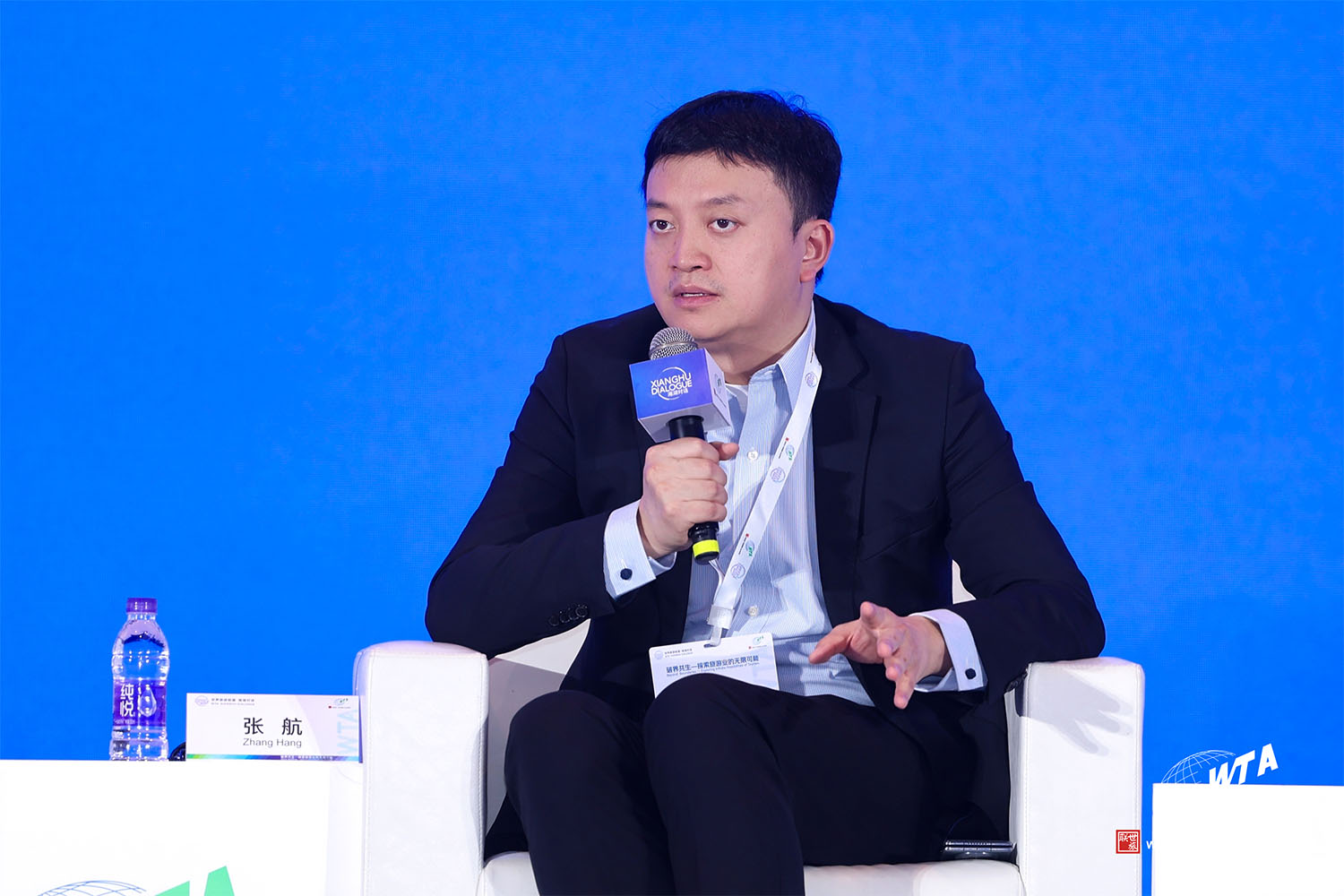
Mr. ZHANG Hang: Having dedicated 15 years to online video, iQIYI is now turning its strategic focus to the integrated development of "Film & Television + Cultural Tourism". Popular series like "The Knockout" have put Guangdong’s Jiangmen and its famed pig’s feet noodles on the tourism map, while "To the Wonder" has transformed its filming locations into hotspots for young travelers. Since 2017, we have concentrated our efforts on this integration by leveraging Virtual Reality (VR) technology, aiming to tackle two major challenges of offline immersive experiences: low space utilization efficiency and high labor costs. Taking hit shows like "Luoyang" and "Strange Tales of Tang Dynasty" as examples, we have accumulated a wealth of digital assets through virtual filming. These assets can be directly repurposed for offline installations, which not only enhances the authenticity of the scenes but also significantly reduces production costs. Currently, we are developing the world’s first iQIYI Park in Yangzhou. Upon the completion of "Strange Tales of Tang Dynasty 3", key props and sets from the production will be transported to the park. In the future, visitors will experience a wondrous blend of virtual and reality, with full-sensory immersion and a one-stop "in-character" journey. In terms of traffic conversion, we leverage our content production advantage. With major series filmed regularly in locations like Hengdian, we plan to bring activities such as production commencement ceremonies and creator-audience meetups to our offline parks, effectively turning "filming into traffic". Meanwhile, to address the tourism industry’s off-season challenges, we provide our parks with steady visitor flow during low seasons through continuous content output. This approach enables blockbuster film and TV IP to genuinely empower offline experiences, creating a "Content → Experience → Consumption" closed loop.
文化发展有限公司实景娱乐事业部总经理王宁.jpg)
Mr. Elio WANG: As the global exclusive copyright holder for "The Three-Body Problem" IP, Three-Body Universe’s business spans film, publishing, online interaction, and offline immersive entertainment. One of the greatest challenges in translating this 800,000-word sci-fi epic into an offline experience is transforming its abstract worldview into an emotional experience that deeply resonates with visitors. Today’s fans are no longer content with just "viewing". They yearn to "enter the story" — to become part of the narrative, where their choices can influence the plot’s direction. In response, we have developed an experiential model centered on immersive experiences, layered with role-playing, value resonance, and a consumption closed loop. A case in point is the "Three-Body Four-Dimensional Space" sci‑fi experience centers launched this year in Beijing and Shenzhen. We offer multiple story endings, allowing visitors to step into a role and engage in profound reflection. At the "Time-Space Roaming" and "Future Academy" family entertainment centers in Suzhou and Shanghai, we track visitor behavior via wearable devices, generating personalized reports that transform them from passive consumers into active participants. Our practice demonstrates that emotional resonance can significantly boost consumer spending willingness. Merchandise derived from our projects can contribute up to one-third of total revenue. We believe immersive IP represents the future of theme parks. It moves beyond the traditional model of stacking amusement attractions toward a profound symbiosis of content, emotion, and physical space. We are now progressing from individual projects to a more systematic, larger-scale layout, with the goal of building a world-class Three-Body Universe Theme Park and inject new momentum into urban cultural tourism consumption.
主任周围.jpg)
Mr. ZHOU Wei: Our lab operates on the philosophy of "Phone-Free Experiences" — in the AI era, people are no longer bound to a single smartphone. Instead, they can engage with a diverse array of smart hardware to enhance their travel journeys. As showcased here today, our "Hang Xiaoyi" cultural and tourism smart agent seamlessly integrates IoT technology, communication chips, and AI. It is already in service at the Hangzhou West Lake Museum, offering free assistance to citizens and tourists. Looking ahead, we will partner with Rokid to utilize smart glasses, shifting tourism from passive "viewing" to active "entering" the scenery — creating a transformative new form of interactive experience. We have introduced the slogan "Travel One More Hour". The goal is not to artificially extend the length of a stay, but to reclaim valuable time for travelers by using digital solutions to reduce congestion, queuing, and waiting. Simply idling by the West Lake holds more value than being stuck in traffic. The "tourist-centered" philosophy is reflected in services designed for speed and convenience — whether it’s "10 seconds to find a restroom, 20 seconds to enter an attraction, or 30 seconds to check in", or the pioneering "Luggage-to-Train-Seat" delivery from hotel desks. We believe technology should enhance human perception and experience, not create new information barriers. Hangzhou is actively building an organic, smart tourism ecosystem to enable more people to enjoy seamless, smooth, and truly immersive journeys.
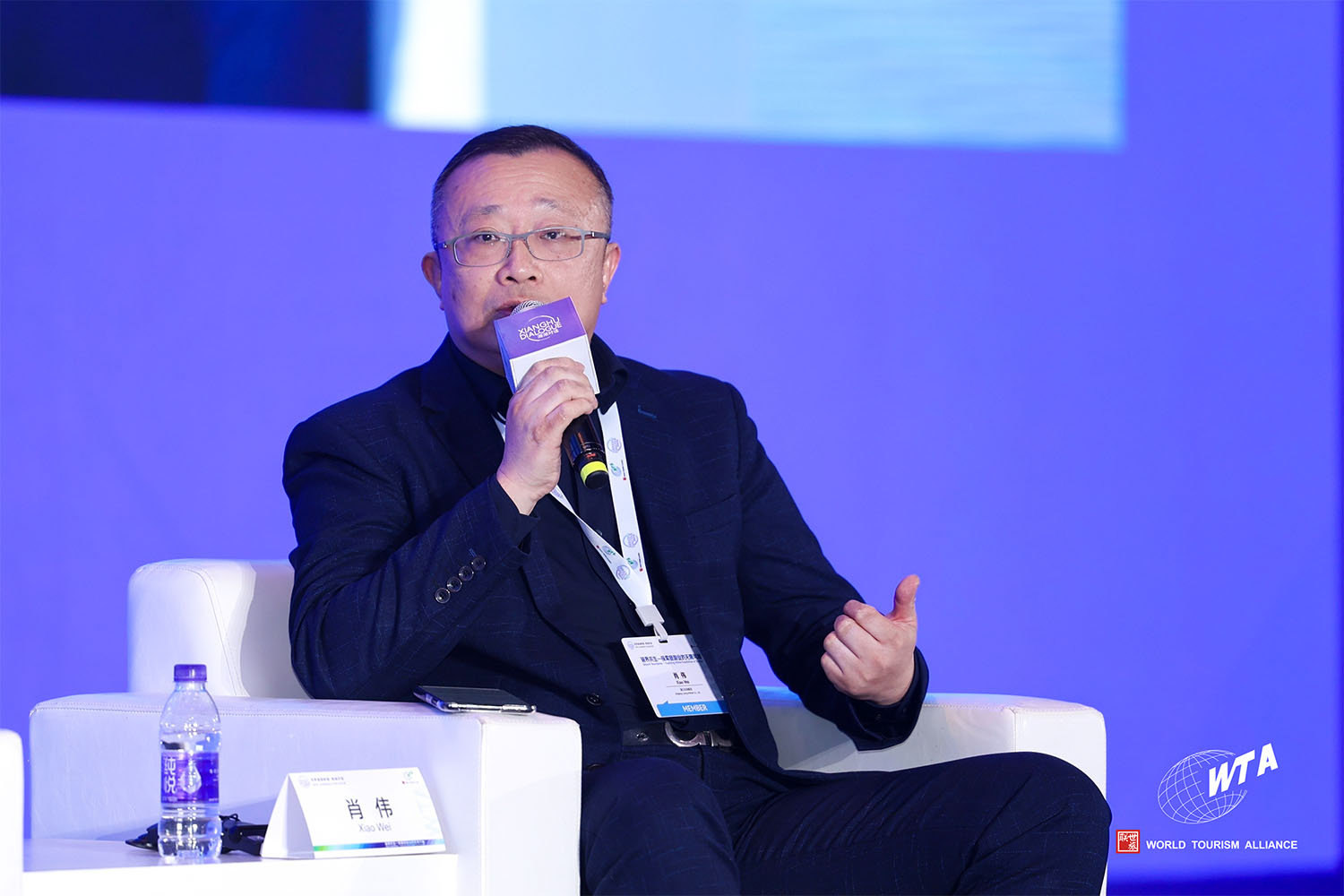
Mr. XIAO Wei: Loong Air is undergoing a strategic shift from being a "means of transportation" to becoming a "travel service ecosystem". Operationally, we have established the country’s first AI-based aircraft maintenance system, significantly improving maintenance efficiency and flight punctuality. This initiative tackles travel pain points like flight delays at their source. In passenger services, we have introduced "Ask Longbao" (Longbao Wenwen), an AI assistant designed to simplify air travel. In China, where hundreds of millions have never flown and often find flight bookings and procedures complex, Longbao addresses this challenge by instantly answering queries on schedules, on-time predictions, and refund/change policies. It also proactively sends delay notifications. Available around the clock, its response speed far exceeds that of human agents. Building on this foundation, we introduced the "Digital Xiang Card", a bridge to deepen connections with destinations. This card integrates access to local cultural tourism resources, attractions, hotels, and lifestyle services. It leverages AI to understand travelers’ needs, offering customized benefits in collaboration with our partners. For example, when arriving in Hangzhou, travelers can use the card to receive tailored restaurant recommendations and step‑by‑step airport navigation. Currently, the "Digital Xiang Card" provides differentiated services at the enterprise level. In the future, it will rely on big data analytics to offer precise, personalized customization for individual travelers, truly achieving the ideal of "effortless, worry‑free travel". In the drive to build a leading tourism nation, airlines should no longer act merely as transport carriers; rather, they ought to become the starting point and enduring companion of every memorable journey.
Moderator: What’s your ideal vision for future travel technology? And at its heart, what do you hope it truly offers to travelers?
Ms. Sarah WANG: Ultimately, technology exists to serve people. The future of tourism I envision is seamless and effortless. Travelers should be able to explore a destination with the ease and familiarity of a local, breaking through cognitive barriers to fully immerse themselves in the local way of life — all while feeling safe and comfortable. The true value of technology lies not in showcasing technical prowess, but in dissolving that sense of unfamiliarity, making every journey feel like a natural and fluid extension of life itself.
Mr. ZHANG Hang: In China, there’s a vast audience that has yet to experience world-class theme parks like Universal Studios or Disney. Our vision is to use technology to make premium entertainment more compact and accessible. Within spaces of just 10,000 m2 to 20,000 m2, we can deploy technologies such as virtual reality to deliver high-quality, immersive experiences that run day and night. Looking ahead, we aim to bring these parks to more cities — closer to where people live — so that globally acclaimed entertainment can reach everyone in a more convenient, affordable, and locally adapted way.
Mr. Elio WANG: Beyond pure technology, my ideal "new trend" is to create a "living parallel universe" powered by a super IP. In this universe, visitors are no longer passive observers of a story; they are active participants — their choices can genuinely influence the plot and shape their experience. This transforms the meaning of travel from "watching an adventure" to "living your own epic", ensuring every journey leaves behind a unique memory and imprint. This is the essence of what immersive experiences should deliver.
Mr. ZHOU Wei: We advocate a guiding idea: let every traveler feel like a "temporary local" in Hangzhou. Travel often carries a sense of unfamiliarity, but the ideal experience should be like a "home away from home". In the near future, each visitor to Hangzhou will be accompanied by a thoughtful digital assistant, offering localized guidance throughout their stay. On the technology front, we envision deploying a personal "digital twin" — an AI agent that connects seamlessly with Hangzhou’s service ecosystems. This enables a truly personalized, seamless local living experience — one that adapts to each individual, so every visitor can genuinely "live like a local".
Mr. XIAO Wei: Our vision is simple: to empower everyone to travel smartly and with ease, using just one smartphone, one AI assistant, and one travel pass. By seamlessly connecting flights, destinations, and local services, we are building a streamlined, lightweight travel ecosystem that lowers barriers and enhances reliability. Technology shouldn’t complicate — it should simplify the journey, making it effortless for everyone to start their own adventure.